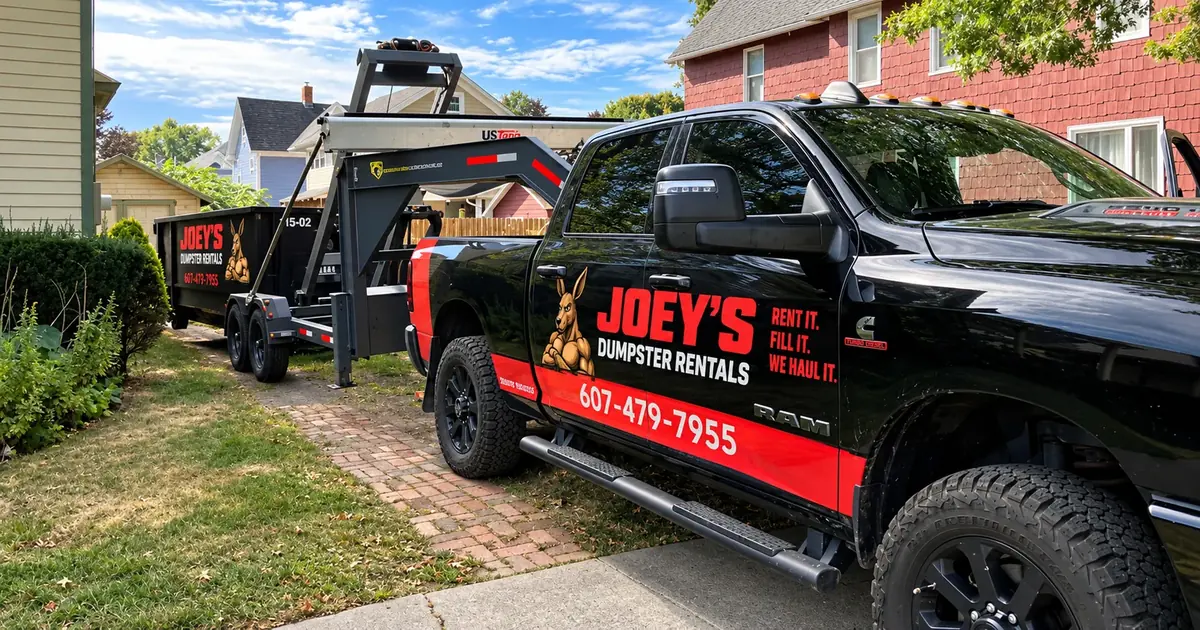
Planning a cleanout or renovation? Before the first load goes in, it helps to know what belongs in a roll-off dumpster and what doesn't. A little sorting up front keeps your project moving and keeps pickup day simple. Here is how we think about it at Joey's Dumpster Rental, whether you are in Corning, Elmira, Sayre, or anywhere else across the Southern Tier of New York and northern Pennsylvania.
What Usually Goes in a Roll-Off Dumpster
Roll-offs are built for bulky, everyday debris from homes and job sites. Most projects fill up with some mix of these:
- Household junk and furniture: couches, tables, chairs, toys, boxes, and general clutter.
- Construction and demolition debris: drywall, lumber, shingles, tile, siding, and similar renovation waste.
- Heavy masonry: concrete, brick, and asphalt are dense, so they add weight fast. Heavy loads are best planned ahead, so see the size pages below before you order.
- Scrap metal and pipes: metal is usually straightforward to load.
- Flooring, cabinets, and fixtures from kitchen and bathroom remodels.
If you are not sure whether something fits, ask us. We would rather answer a quick question than have you guess.
What Can't Go in Our Dumpsters
While we can handle a wide variety of waste, we cannot accept the following:
- Hazardous materials: chemicals, solvents, pesticides, herbicides, pool chemicals, and strong cleaners. These can react with other trash, leak into soil, or put the crews who handle your waste at risk.
- Oil: motor oil, fuels, and similar products.
- Liquids: anything that can pour or leak out of its container.
- Paint: including stains and thinners. Keep leftover cans in their original containers and set them aside.
- Asbestos: this is a serious health hazard and should only be handled by licensed professionals. If you suspect it in old flooring, insulation, or siding, stop and have it tested before demolition.
Items That Usually Need Special Handling
Some items are not hazardous in the same way, but they are regulated or tricky to process. They usually need special handling, so please ask us before loading any of these:
- Mattresses and box springs: these carry an added fee, so let us know up front.
- Appliances with refrigerant: refrigerators, freezers, air conditioners, and dehumidifiers contain coolants that must be removed by a qualified technician.
- Electronics: TVs, computers, monitors, and printers contain materials that are best recycled rather than thrown out.
- Tires and car batteries: both are commonly handled through retailers and recycling programs.
- Propane tanks and other gas cylinders: pressurized containers are a real safety risk during hauling and disposal.
- Water heaters and large appliances: ask before loading, and drain any fluids first.
- Treated wood and railroad ties: these are often treated with chemicals.
- Medical waste and needles: these need proper medical disposal and should never be mixed with household debris.
- Large amounts of food waste: it attracts pests and creates odors, so your regular trash service is usually a better fit.
We cannot accept yard waste or brush (grass, leaves, branches).
Where to Take the Items We Can't Haul
Found something on the "can't go in" or "ask first" list? Don't panic. You have good options:
- Household hazardous waste programs: your county or town solid waste office can tell you about drop-off sites and collection days for paint, chemicals, and similar products.
- Retailer take-back programs: many stores take back electronics, batteries, and tires.
- Certified recyclers: a quick search for e-waste recycling or hazardous waste disposal near you will turn up local choices.
- Licensed professionals: for asbestos or refrigerant removal, hire a qualified contractor or technician.
Rules differ from one county and town to the next, so a short call to your local office is worth the time.
A Quick Checklist Before You Load
- Walk the project area and pull out anything on the "can't go in" or "ask first" lists.
- Keep leftover chemicals and paint in their original, sealed containers, and never mix products together.
- Take a photo of anything you are unsure about and send it to us. It makes the question easy to answer.
- Plan where each type of material will go, so a recycling run or drop-off trip does not catch you by surprise.
Sort as You Go
The easiest habit on any job is to separate as you work. Keep regular debris like wood, drywall, and general junk in one pile, and set aside anything hazardous, electronic, or chemical. Sorting along the way is far faster than untangling a mixed pile at the end, and it keeps your rental on schedule.
Load It Safely
- Start with a flat base. Place large, flat items on the bottom first.
- Break things down. Flatten boxes and take apart furniture so you use every inch of space.
- Spread the weight. Distribute heavy items evenly so the load stays stable.
- Stay below the top edge. Never fill the dumpster higher than the walls. Overfilled loads are unsafe to haul.
- Keep hazards out of the mix. Never tuck a can of stain or a tank "just this once" under other debris. Hidden items are the ones that cause problems later.
Picking the Right Size
Once the special items are set aside, it comes down to matching the container to your project. Our 12-yard dumpster suits smaller cleanouts and bathroom remodels, the 15-yard dumpster gives mid-sized jobs more room, and the 20-yard dumpster is built for bigger renovations and whole-house cleanouts. For specifics on each size, see the size pages linked above. If you are still deciding, our dumpster size guide can help you match a container to your project.
Why These Rules Exist
These guidelines are not red tape. Mixed-in hazardous items can injure the crews who handle your container, cause trouble at the facilities that process the debris, and harm the Southern Tier's land and water. Following the rules keeps people safe and keeps your project running smoothly.
Not sure about an item? That is exactly what we are here for. Contact Joey's Dumpster Rental with your project details, and we will help you choose the right container and tell you what to set aside.