Renovations create a lot of debris, and they create it fast. Old cabinets, torn-up flooring, and bundles of shingles pile up quickly, and a cluttered job site is slow and unsafe. A roll-off dumpster gives all of it one place to go.
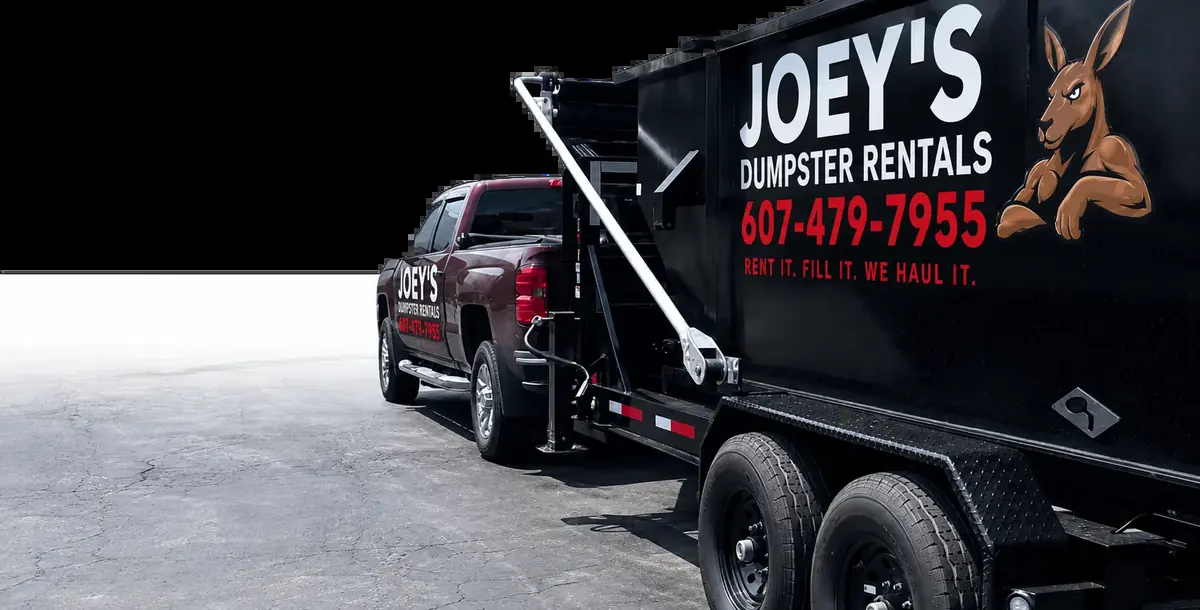
We're Joey's Dumpster Rental, based in Horseheads, NY. We put roll-offs on driveways and job sites across the Southern Tier of New York and northern Pennsylvania. Below is our rundown of ten renovation projects that benefit from a dumpster, and the size that usually fits each one.
Dumpster Sizes at a Glance
We offer three roll-off sizes for renovation work. All three are about 14 feet long and 7.5 feet wide. The wall height is what changes.
- 12 yard (about 14' x 7.5' x 3.5'): best for small cleanouts and smaller remodels. It is also the easiest to fit on a tight driveway.
- 15 yard (about 14' x 7.5' x 4.5'): our go-to for medium projects, including most kitchens and larger demolition jobs.
- 20 yard (about 14' x 7.5' x 6'): built for multi-room remodels, commercial work, and new builds.
For rates and rental terms, see the 12 yard, 15 yard, and 20 yard size pages.
Not sure where your project lands? Start with how many rooms you are tearing out. One room usually points to a 12 yard, a few rooms or a kitchen points to a 15 yard, and a whole-house job points to a 20 yard. The projects below give you more detail.
10 Renovation Projects and the Dumpster Size That Fits
1. Kitchen Remodels
Kitchens produce a heavy, mixed pile: cabinets, countertops, flooring, drywall, and sometimes a soffit or two. A 15 yard is the usual fit. It holds a full kitchen tear-out once you break the cabinets down, without taking over the whole driveway. Ask us before loading old appliances.
2. Bathroom Remodels
A bathroom gives you tile, drywall, a vanity, and old fixtures. That is a good match for a 12 yard, especially where space is limited, like many lots in Elmira Heights and Pine City. If you are redoing two baths at once, step up to a 15 yard.
3. Flooring Removal
Pulling up carpet, pad, laminate, vinyl, or hardwood is bulky work. One or two rooms fit comfortably in a 12 yard. If you are replacing flooring through most of the house, a 15 yard gives you more room.
4. Roof Tear-Offs
Old shingles, underlayment, and any rotted decking add up. Shingles are heavy, so size carefully. Smaller roofs often fit a 12 or 15 yard, while larger roofs or jobs that remove more than one layer may call for a 20 yard. Tell us about your roof and we'll help you pick.
5. Siding Replacement
Vinyl, wood, and aluminum siding are lightweight but bulky, and they take up space fast. A 15 yard is typically enough for a standard home, and it is a common sight in neighborhoods from Corning to Odessa.
6. Deck and Patio Removal
Tearing out an old wood deck leaves a lot of long lumber. A 15 yard handles most decks, and a large multi-level deck may need a 20 yard. Heavy masonry such as a concrete patio is different, so ask us before loading concrete, brick, or stone.
7. Shed and Fence Demolition
Taking down an old shed or a run of fence is mostly lumber, siding, and roofing. A 12 yard works for a small shed, and a 15 yard suits a bigger one or a shed plus fence. We cannot accept yard waste or brush (grass, leaves, branches).
8. Basement Finishing and Cleanouts
For a basic cleanout of years of stored items, a 12 yard is usually plenty. A full finishing project with framing, drywall, and new flooring waste is better suited to a 15 yard. Ask us before loading anything like paint cans, batteries, or old chemicals you find while clearing things out.
9. Garage Cleanouts and Demolition
Garages tend to become storage for everything. A cleanout fits a 12 yard. If you are tearing out walls, flooring, or a whole garage, a 20 yard is the safer choice. Mattresses carry an added fee, so mention them when you call.
10. Multi-Room Remodels, Whole-House Gut Jobs, and New Builds
When you are updating several rooms at once, or gutting a property, the debris adds up in a hurry. A 20 yard keeps the project moving without constant trips to swap or empty containers. It is also our pick for commercial work, new builds, and flips. If you are a contractor planning several jobs, our dumpster size guide can help you plan.
What Can Go in a Renovation Dumpster
Typical renovation debris, like roofing shingles, drywall, lumber, and flooring, is exactly what roll-offs are for. Some items are not allowed in our dumpsters:
- Hazardous materials
- Oil
- Liquids
- Paint
- Asbestos
For other regulated items, such as tires, batteries, appliances, or chemicals, ask us before loading. If you are not sure about something, ask. A quick call is easier than a problem after pickup. You can read the full list on our dumpster rental rules page.
Tips for Choosing the Right Size
- Walk the project first. List the rooms and materials coming out. Cabinets, framing, and flooring take up more space than most people expect.
- Measure the spot. Each size is about 14 feet long, so check that you have room for it and a clear way in.
- Break things down. Flattened cabinets and cut-up lumber pack in tighter than whole pieces.
- Check on permits. Ask your local municipality or your contractor whether you need a permit for the work or for placing a dumpster.
- When in doubt, call. If you are between two sizes, we're happy to talk through your project and help you decide.
Where We Work
A dumpster on site means no repeat trips to the landfill and no debris piling up in the yard or garage while you work.
We serve homeowners and contractors in Elmira, Elmira Heights, Horseheads, Big Flats, Corning, Watkins Glen, Montour Falls, Waverly, Spencer, Van Etten, and Odessa in New York, and Sayre and Athens in Pennsylvania, along with nearby communities. See our full service area to check your address.
Ready to Start Your Renovation?
Don't let debris become the hardest part of your project. Contact Joey's Dumpster Rental and tell us what you're working on, and we'll help you find the right size.